

Trade Training in Australia and the Opportunities for High School Students.
I have two children, one has completed a university degree and is currently completing a Certificate 3, and the other is working through an apprenticeship. While I thought both children would go to University, I am comfortable with the choices we have made with our children about their working futures and excited about the multitude of pathways for young people to achieve their vocational dreams. This article explores the changing face of VET in a world of ever-changing employment opportunities.
What Is Trade Training?
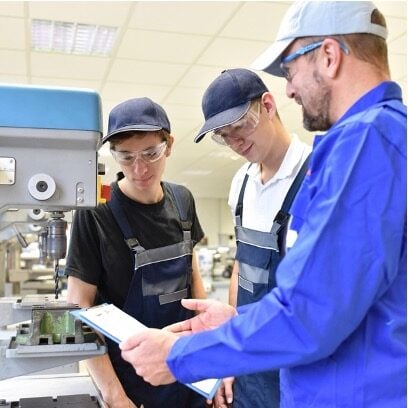
Trade training is part of Australia’s Vocational Education and Training (VET) system. It includes apprenticeships, traineeships, and TAFE courses that teach practical skills for jobs in industries such as: Building and construction, plumbing and electrical, automotive, hospitality, aged care and early childhood education. These programs often combine classroom learning with real-world experience, allowing students to “earn while they learn.”
The government has been expanding its funding to the VET sector over the past few years since Covid and although there has been a slight decrease this last year (decline in employer support after Covid), VET funding over the last 5 years has risen by $55.8 billion dollars. Housing and Care industries are the two largest priorities; however, it is interesting to note governance and administration cost more than double the amount spent on student support(7).
Trades Are Making a Comeback
In recent years, trade careers have surged in popularity among Australian high school students. A national study by the Australian Council for Educational Research (ACER) revealed that 41% of Year 11 and 12 students now plan to pursue apprenticeships, traineeships, or TAFE courses after school—up from 29% just three years ago. (1). This represents an increase in the demand for short courses, that are skills based but may help to build into longer term programs of study.
This shift is driven by several factors:
- Skills shortages in industries like construction, healthcare, and hospitality.
- Rising university costs, making trades a more affordable and practical option.
- Government campaigns promoting vocational education and hands-on careers.
Who’s Getting Involved?
According to the National Centre for Vocational Education Research (NCVER), 5.1 million students participated in nationally recognised VET courses in 2023—a 10.8% increase from the previous year. (2) Of these:
- 2.1 million studied full qualifications.
- 230,000 took short courses.
- The most popular subjects included first aid, construction safety, and hospitality.
In trade-specific training, there were 238,765 apprentices and trainees in trades as of March 2024. While this marked a slight decline from the previous year, sectors like automotive and electrotechnology saw growth. (3)
While the above statistics represent multiage and international student participation, around one in four senior secondary students now undertake some VET courses as part of their schooling. This has significant implications for school pathways, funding and staffing. Although RTO’s are taking an increasing share in these responsibilities as schools look to outsource the VET function.
While the Public Education sector is training around 60% of these students, the remaining are split between the Catholic and Independent education providers. Non-government schools are increasingly embracing VET as part of their senior secondary offering, as they respond to student demand, labour-market signals and competitive schooling landscapes. (7) I attended a Year 12 graduation recently where nearly all students had completed a certificate or diploma course as part of, or in addition to, their QCE/ATAR study.
Making It Easier to Get Started
The Australian Government is investing heavily in trade training to meet future workforce demands. Key initiatives include:
- Fee-Free TAFE - Over 500,000 fee-free places are being offered between 2023 and 2026, with an additional 20,000 places (including 5,000 pre-apprenticeships) added in 2025 to support the construction industry. (4)
- Better and Fairer Schools Agreement (2025–2034) - This 10-year plan boosts funding for public schools and ties it to reforms that support equity, wellbeing, and workforce development—including vocational pathways. (5)
- New Vocational Degrees - A new qualification called the Vocational Degree is being introduced. It offers hands-on learning at the same level as a bachelor’s degree, ideal for students who prefer practical education. (6) This degree is still waiting development and implementation but provides potential for students to gain a bachelor’s degree with VET training.
Why Choose a Trade Career?
Here are some compelling reasons to consider trade training:
Job Security: Trades are in high demand. Australia faces shortages in construction, aged care, and digital tech.
Good Pay: While apprenticeship wages remain low, many trades offer competitive salaries, especially as you gain experience.
Hands-On Learning: If you prefer doing rather than sitting in lectures, trades are a great fit. The balance between learning styles allows those destined for trade work a better approach to their learning where practical skills are taught and experienced.
Pathways to Growth: You can start with a Certificate III and work your way up to a diploma or even a Vocational Degree.
What Schools Are Doing?
Schools across Australia are expanding their VET offerings. Many now partner with local employers to provide real-world experience and tailored career guidance. This ensures students can make informed decisions and transition smoothly into the workforce. (1) Many schools offer a school-based apprenticeships as a pathway into a full-time trade so students can marry both the HSC and their move into a trade, post Year 12. While these arrangements usually involve a local TAFE or RTO, some schools have their own trade departments on campus where certificates can be completed.

Trade training doesn’t have to be a backup plan—it’s a smart, future-focused choice in following their passion about building, caring for others, or working with technology. There’s a trade pathway that can help students turn their interests into a rewarding career.
As a Careers Advisor, you can help students thinking about what comes next, so don’t overlook the power of vocational education. It’s practical, supported, and packed with opportunity.
References