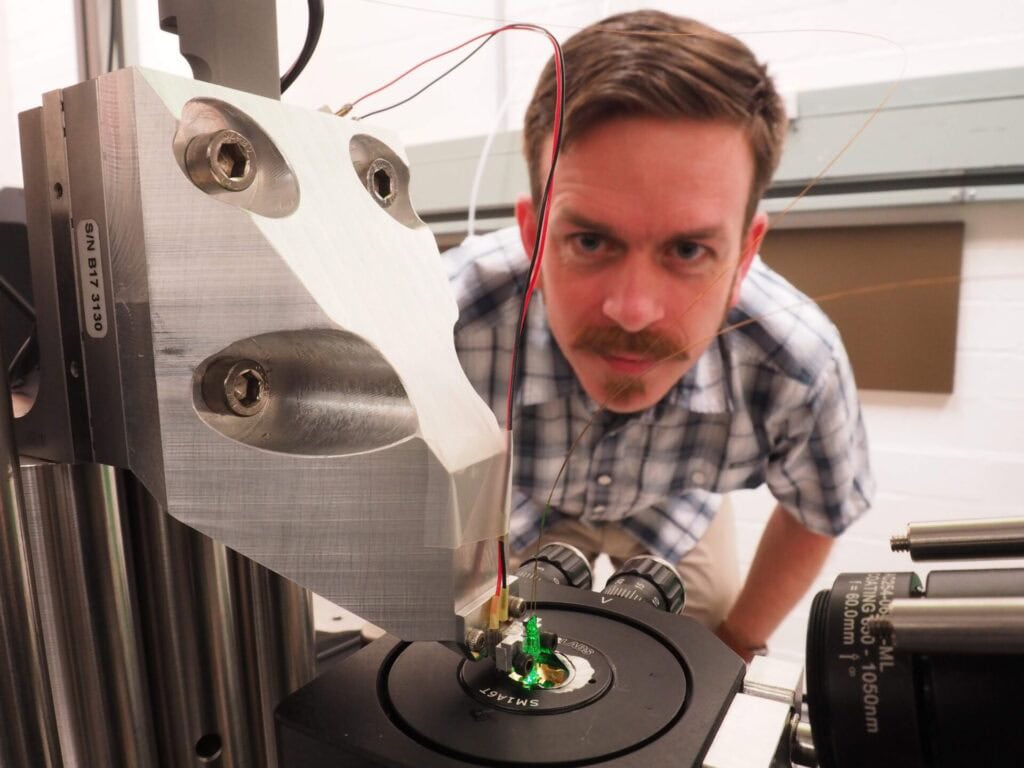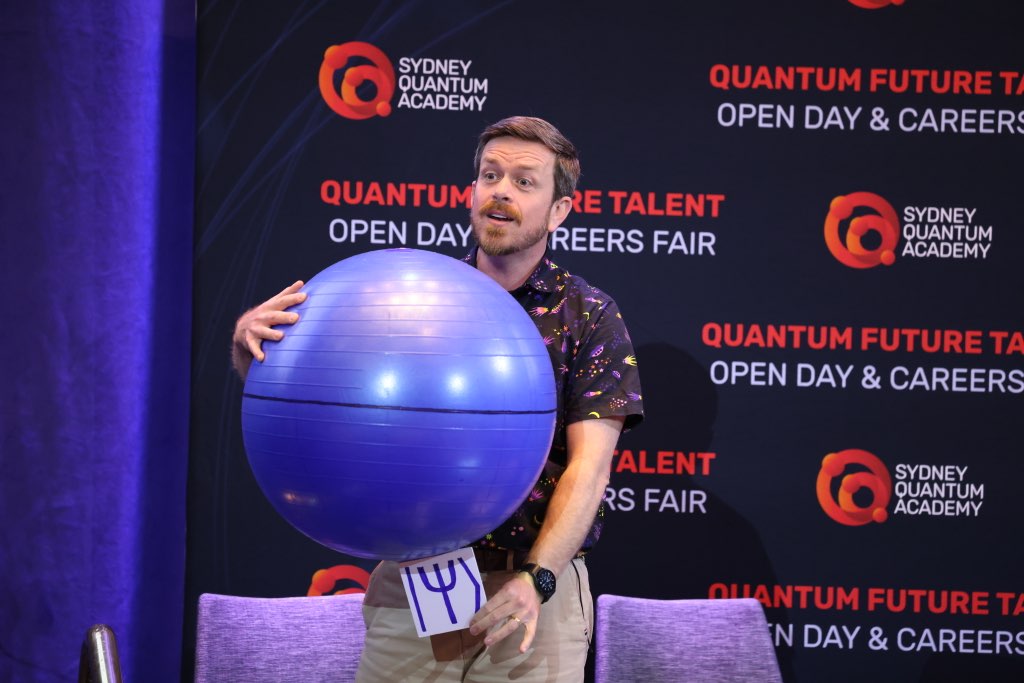

He is one of a handful of Australians actively shaping the future of quantum science and technology. Now, Dr Lachlan Rogers’ research in diamond-based technologies has earned him a spot on UNESCO’s global Quantum Top 100.
Dr Rogers, a proud Avondale Alumnus, was acknowledged for shaping quantum science and technology and as a leading global researcher. I sat down with Lachlan to talk about his incredible journey and research into glowing diamonds that has earned him international praise.
“This is an exciting recognition by peers in the world of quantum science and technology,” he says, “it is opening some surprising opportunities to do exciting projects.”
From apple slices to quantum diamonds
Before he became Dr Rogers, young Lachlan had an early, unconventional head start in science, with both his maternal grandfather and his own father, Avondale adjunct lecturer Dr Lynden Rogers, being passionate science teachers.
Inspired by his academic father, who taught through everyday objects, Lachlan recalls a vivid childhood memory: learning about ratios and fractions by cutting apples on the kitchen bench. Looking back, Lachlan fondly remembers that science and maths were fun from an early age, laying the foundation for discovering how things worked, eventually leading to his passion for diamond-based quantum technology. He reflects, “I feel fortunate that the sort of childhood I had influenced that it was possible to think of it [maths] as something fun.”
Lachlan’s path to Avondale came naturally, given his close ties to the institution through his dad and a group of friends who shared his love of science. Even though living locally, he chose to live in the dorms like most first years, “just for the experience," he says, immersing himself in the friendships and social dynamics of studying and living together with his peers.
During his time at Avondale, a significant cohort of science students was unusually large compared to other years. That same class celebrated their 20th anniversary at Homecoming 2025.
Post-Avondale, Lachlan completed his PhD in experimental quantum physics- “playing with toys in a laboratory” as he affectionately puts it. It is during this time that he began developing his groundbreaking research into diamond-based quantum. His bond with his PhD supervisor became a valuable part of his studies. “In my career, I’ve had the opportunity to supervise - it’s a very tangible way... [of] transferring knowledge and ideas but also learning.” Dr Rogers' passion for being a role model and mentor to guide the next generation of academics is evident in his over 15 years of supervising master's and PhD students.
Postdoctoral work took him to Germany as a researcher, then returned to Australia as an Australian Research Council Research Fellow at Macquarie University.
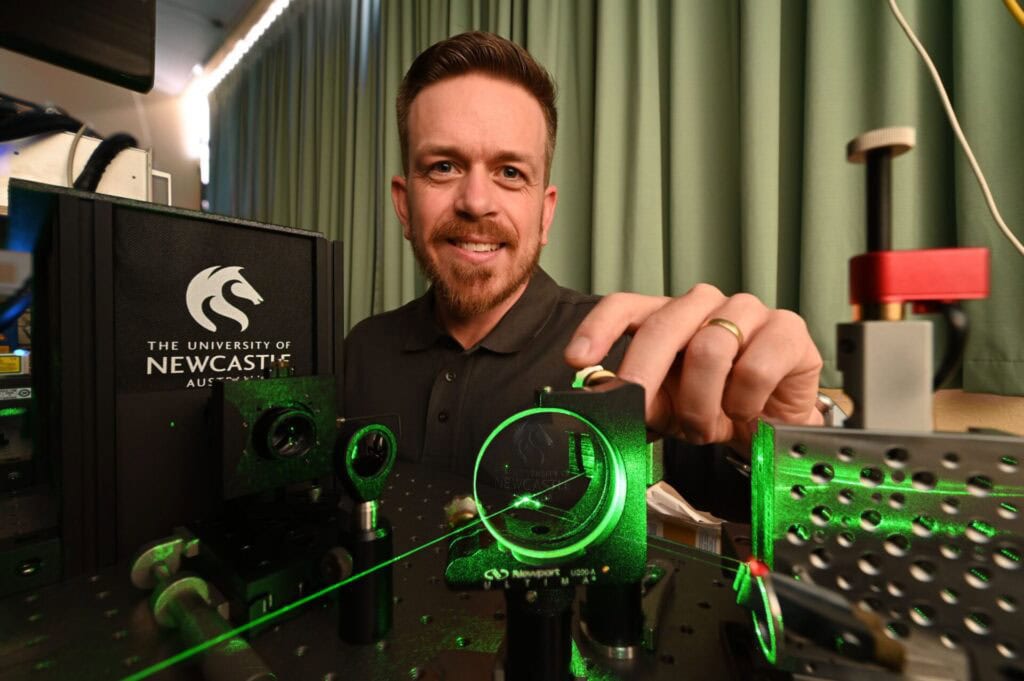
Dr Rogers continued his research on diamond-based quantum technologies. It took several attempts to explain this complex area of research; however, Lachlan enjoys simplifying it in one sentence: "I shine lasers at diamonds to make them glow”.
Those lasers highlight glowing defects (impurities in the diamond) that reveal quantum effects, a discovery that can be used to measure tiny magnetic fields or temperatures with precision. It also helps create secure ways to send information and form building blocks for future quantum computers.
In 2020, Lachlan co-founded Redback Systems, a CSIRO-supported startup developing powerful scientific instruments with real-world applications. Since 2015, CSIRO has supported over 8500 researchers, giving them access to investors and over $371 million in grants to support innovation.
While growing his business, Lachlan began teaching as a Senior Lecturer in the School of Mathematical and Physical Sciences at the University of Newcastle.
Amongst all these achievements, Dr Rogers also found time to host the podcast Clear as Quantum and has become an established, published researcher.
Mentoring
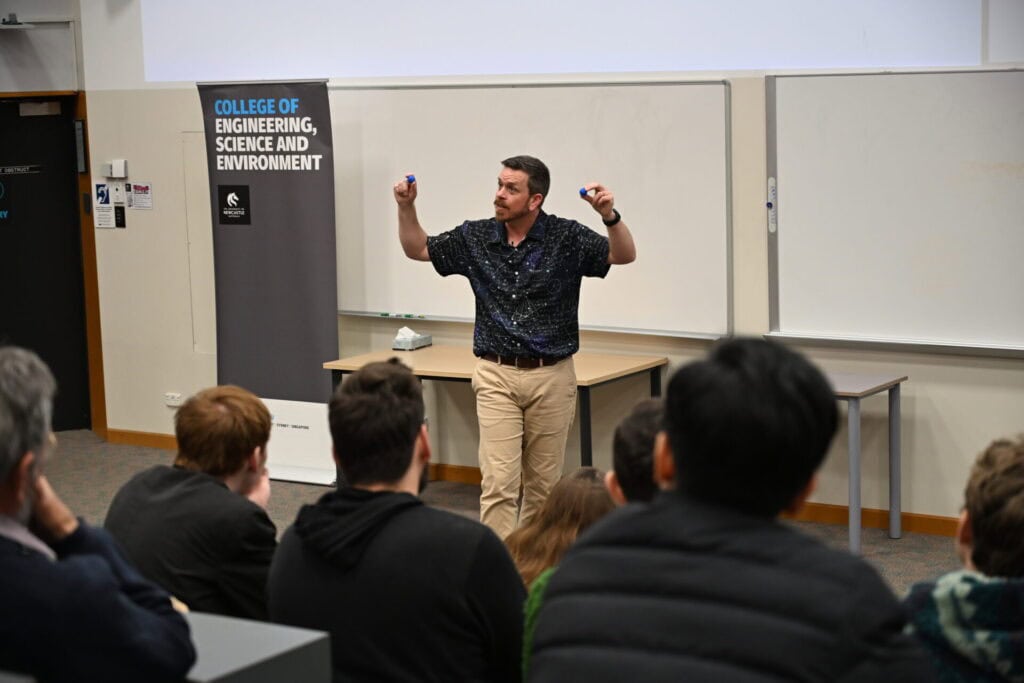
His love for science and innovation placed him in front of many young students presenting at the ARC Centre of Excellence for Engineered Quantum Systems and the Australian and New Zealand Conference on Optics and Photonics (ANZCOP).
Frequently, you can see Lachlan advocating for the education of science and quantum physics and sharing his passion with people of all ages who are willing to engage and learn.
“I tell my students, it’s basically just deeply habitual laziness”, referring to what it means to be a physicist, “I don’t want to solve a new problem, instead, can I make this problem into one I’ve already solved?” Essentially, what Dr Rogers is describing is efficiency: utilising past knowledge to solve a new problem.
Dr Rogers continues in jest, “I’ll let you in on a secret, Physicists hate memorising lots of facts,” laughs Dr Rogers. “Being a scientist is about being efficient: they need to know how to answer the largest possible set of questions.”
Lachlan recalled a memorable road trip in 2024 with a group of science colleagues from Sydney to Perth, during which they visited regional schools to deliver programs and promote STEAM. “You see these kids in the Australian outback, and their picture of where life could go is quite different,” he says. “For some, it might be the first time they’ve thought, ‘What if I could be a scientist one day?’” This opportunity for students to interact through fun activities that also help them grasp complex scientific theories. A highlight for Lachlan was showing the kids his research in real life, the glowing diamond, along with all the lively conversations and enthusiasm that came from their interactions. A parallel memory that Lachlan once shared as a young boy on the kitchen table, learning about science.
The future
This refreshing and inspiring local Aussie is making such a global impact, while also connecting researchers and investors. It’s these innovators who can visualise emerging quantum ideas as real technologies that will shape the next wave of breakthroughs in science, right here in our own backyard.
Lachlan hopes to convey optimism about the field and the future of quantum physics in Australia to the next generation of scientists. His advice: “It's worth the effort. Many people feel that science might be 'hard', Lachlan explains, “… it is fantastically satisfying to be able to understand things about the natural world and our universe. Stick with it and stay curious.” For most of us, the ability to understand complex subjects such as quantum physics lies well beyond our comprehension. However, it’s evident that Dr Rogers' focus is much simpler, encouraging anyone to remain curious about the world around them.
The greater vision
Innovators like Dr Rogers dedicate their lives to discovery and passion, finding purpose and meaning in their work and in the beauty of everyday things. When asked how his view of a ‘greater vision’ for our world has changed since he was at Avondale, his answer reveals a thoughtful perspective shaped by his experience.
“I was a student at Avondale (just) before we all had the internet on our phones. I think back then I thought of a Greater Vision in terms of world needs "out there somewhere" - overseas in places of poverty. That is still a true part of the picture, but it seems to me that our world now is dramatically more oriented around people's attention as a sort of currency. A Greater Vision of full human experience includes having positive and fruitful ways to invest our attention. Getting excited about the deep beauty in nature (yes sunsets, but also superpositions and supernova too) is a great way to live life!”
***The United Nations Educational, Scientific and Cultural Organisation is a specialised agency of the United Nations with its primary mission to promote international cooperation and build peace through collaboration in the fields of Education, science, culture and communication/information.