Recent research [READ IT HERE] conducted by Aneesh Rai, Edward Chang, Marissa Sharif, Katy Milkman, and Angela Duckworth underscores the effectiveness of breaking down large goals into smaller, more manageable subgoals to achieve long-term success. By encouraging volunteers at Crisis Text Line (CTL) to focus on short-term targets, such as volunteering 4 hours weekly or 8 hours biweekly, the study observed a significant increase in volunteering hours, highlighting the potency of subgoal framing in driving goal attainment.
The study's implications extend beyond individual endeavors to organizational contexts, where implementing subgoal strategies could yield substantial benefits. For instance, if CTL were to adopt the most effective approach across all volunteers, it could potentially gain an estimated 19,900 additional hours of volunteering, offering a cost-effective means of enhancing organizational outcomes.
Furthermore, breaking down big goals into smaller ones not only enhances progress but also mitigates procrastination by creating more frequent and immediate deadlines. This approach aligns with previous research, which suggests that detailed subgoals reduce the likelihood of procrastination by offering clearer milestones and making commitment to the goal more appealing.
However, while setting detailed subgoals offers advantages, it also poses risks, such as diminishing flexibility and increasing the likelihood of setbacks. The study acknowledges the importance of psychological flexibility in goal pursuit, advocating for a balance between micro-goals and adaptability to maintain long-term commitment and progress.
In summary, while subgoal setting can significantly enhance progress and mitigate procrastination, finding the right balance between detailed subgoals and flexibility is crucial for sustained commitment and goal attainment. As organizations and individuals navigate goal-setting processes, they must consider the nuanced interplay between goal specificity and adaptability to optimize outcomes effectively.
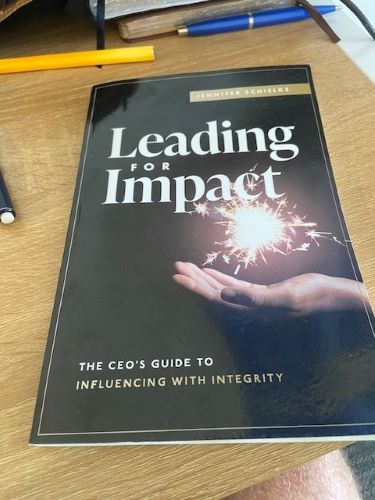
"Leading for Impact: The CEO’s Guide to Influencing with Integrity" by Jennifer Schielke (Advantage Books, 2024) is a compelling exploration of leadership with a robust Christian foundation. Geared towards both new and seasoned leaders, this book encapsulates essential principles while offering valuable insights on leading sacrificially and navigating disruption. Schielke's emphasis on the Christian ethos sets this book apart, providing a refreshing perspective on leadership. For those new to leadership roles or aspiring to lead, it serves as a comprehensive guide covering the fundamentals.
The chapters on leading sacrificially and discerning disruption challenge experienced leaders to extend their influence beyond personal aspirations. Schielke prompts leaders to consider their impact on those around them, urging a shift from self-centered approaches to a more profound focus on serving others.
This book delves beyond the typical discourse on servant leadership, pushing leaders to reevaluate their roles and responsibilities. Schielke's insights resonate deeply, encouraging leaders to reflect on their influence and the transformative potential they hold. "Leading for Impact" is highly recommended for those stepping into leadership roles, providing a solid foundation. Equally, it serves as a thought-provoking resource for established leaders willing to confront challenges and reevaluate their approach. Schielke's unique blend of practical wisdom and spiritual insight makes this book a valuable addition to the library of any leader seeking to make a lasting impact with integrity.
As we reach the midpoint of 2024, Generative AI continues to maintain its influential presence. Take for instance the fact many educational institutions have embraced the integration of AI into their curricula, transforming it from a mere academic influence into a vital educational resource. For example, AI-powered tutoring provides personalised assistance to students, catering to their unique learning preferences and styles. It is anticipated that these systems are poised to recognise moments when students encounter difficulties with concepts and recommend specific resources, challenging the conventional approach of standardised teaching methods.
In a classroom setting, Gen AI is fostering creativity and innovation, including aiding students in coding, crafting music, or even producing art, offering a digital playground for exploration. In a business class setting, we now demonstrate how AI-powered software streamlines repetitive tasks such as data entry and reconciliation, enabling students to focus on higher-order analytical skills. This eliminates the need for demonstrating traditional methods of data entry and reconciliation which typically involve manual input and comparison of financial data, a process susceptible to errors and is time consuming. To see more about how Gen AI can be used in classrooms, refer to TEQSA RESOURCES ON INCORPORATING AI IN YOUR CLASSES HERE
The integration of AI in education is not without its hurdles. The educational system is grappling with issues such as plagiarism and the ethical deployment of AI in classrooms. Generative AI's capacity to compose essays, solve intricate equations, and even produce art has sparked a nuanced debate surrounding academic integrity and the authenticity of students' work. In fact, there is a resistance and apprehension within the academic community regarding this untested technology. Critics voice concerns about Generative AI's potential to diminish critical thinking and problem-solving skills, as well as its tendency to generate misleading or fabricated information. These challenges have ignited discussions on how to pragmatically introduce AI usage in a manner that reinforces, rather than compromises, the principles of educational integrity and the learning journey. In response to these challenges, numerous courses and workshops have emerged, focusing on AI literacy, ethical AI use etc. ALSO SEE TEQSA RESOURCES HERE. These initiatives aim to ensure individuals become active participants in its development rather than passive consumers. Ethical AI courses promote critical thinking, encouraging learners to question both the application and appropriateness of AI technology, fostering a sense of accountability. As we progress, the ethical implications of AI challenge us to consider not only what we can do with technology, but also what we ought to do based on our values.
Academics have undergone a profound transformation, to become guides in a world where information is abundant, but wisdom is scarce. As facilitators of knowledge, in our preparation of students for the realities of the business world, we now play a pivotal role in assisting students in understanding the nuances of AI while simultaneously cultivating essential skills such as critical thinking, creativity, and ethical reasoning.

It is very important to be clear on how you are using your media, what you expect from it and what you hope to achieve. Without intention, social media can easily miss the mark and be ignored, so take time to decide if you are trying to sell something, create brand awareness or simply connect with your customer base. Don’t forget that social media is not organic. Most social media platforms are tightly controlled businesses that only give you what you pay for. The cycle of visibility is short, and a post will see the light of day only briefly unless it is shared or promoted. If you make peace with this, you can use it in a way that best suits the endgame of your organisation.
Here are 5 simple tips for creating a social media post that gets views, and better yet, engagement.
With those tips in mind, you are ready to press “share” on your next post!
In the aftermath of the COVID-19 pandemic, consumer preferences have evolved significantly, demanding deeper connections with brands that reflect their values. In a recent Knowledge at Wharton article written by Angie Basiouny [READ IT HERE], Americus Reed, a marketing professor at Wharton, emphasizes the imperative for brands to articulate their purpose beyond traditional factors like price and style. Reed notes a shift towards existential questions about a brand's societal impact, prompting a focus on values such as social justice, environmental sustainability, and ethical business practices.
The rise of social media has democratized brand narratives, empowering consumers as co-creators of brand identities. Reed suggests that brands embrace collaborative storytelling, allowing consumers to shape narratives authentically. Strategic engagement on platforms like LinkedIn and Facebook is crucial, enabling brands to connect with their audience effectively.
Artificial intelligence (AI) presents further opportunities for brands to navigate the evolving landscape efficiently. AI-driven tools streamline communication tasks, freeing up marketers to focus on initiatives requiring human creativity and expertise. This strategic allocation of resources enables brands to adapt and thrive in the dynamic post-pandemic market environment.
However, the specter of brand failure looms large. Reed acknowledges that mistakes are inevitable, but the response from consumers depends on the strength of the relationship established by the brand. Brands with a clear sense of identity and purpose, coupled with a deep connection to their audience, are better positioned to navigate setbacks. Purpose-driven marketing emerges as a potent strategy for mitigating the impact of failures, as consumers are more inclined to forgive and remain loyal to authentic brands.
In summary, Reed's insights underscore that branding extends beyond superficial markers like logos and taglines. Instead, it represents a strategic asset requiring careful consideration of its sociological and financial implications. By investing in a well-defined meaning system alongside external brand markers, organizations can navigate the complexities of the post-pandemic market landscape and cultivate enduring relationships with consumers based on shared values and purpose.
The rise of remote work, accelerated by the COVID-19 pandemic, has raised profound questions about its impact on collaborative learning. Research [CLICK HERE TO READ] led by Hyejin Youn, an Associate Professor of Management & Organizations at the Kellogg School, and Frank van der Wouden, examined over 17 million scientific publications spanning 45 years to understand how physical proximity affects knowledge acquisition in collaboration. Their study delves into the intricate dynamics of remote collaboration and sheds light on the enduring value of face-to-face interaction in fostering learning and innovation.
In today's digital age, remote collaboration has become increasingly common, fueled by advances in communication technologies. The COVID-19 pandemic further accelerated this trend, compelling organizations worldwide to adopt remote work practices to ensure business continuity. Zoom meetings, once considered a temporary solution, have become integral to remote work culture, enabling teams to collaborate across geographic boundaries. However, amidst this transition towards remote work, questions arise about its efficacy in fostering collaborative learning, particularly in fields where hands-on interaction and nuanced communication are paramount.
Contrary to the assumption that remote collaboration is a perfect substitute for in-person interaction, the research reveals that physical proximity significantly enhances learning outcomes. Analyzing millions of scientific publications, the study found that researchers who collaborated locally were much more likely to gain new knowledge from their teammates than those who collaborated at a distance. This finding underscores the unique value of face-to-face interaction, which facilitates nuanced communication, problem-solving, and the use of specialized equipment.
Despite technological advancements enabling seamless remote collaboration, the research suggests that scholars, particularly those in early career stages and lower-ranked institutions, benefit significantly from local collaborations. Face-to-face interaction fosters mentorship, knowledge exchange, and skill development, which are essential for career advancement and innovation. The findings challenge the notion that remote work is a panacea for collaboration, highlighting the enduring value of in-person interaction in fostering learning and innovation.
Moreover, the study's insights have implications for organizations navigating the transition to remote work. While remote collaboration offers flexibility and cost savings, it may inadvertently hinder collaborative learning and knowledge exchange. Companies must strike a balance between remote work and in-person collaboration to maximize innovation and employee development. Youn emphasizes the importance of establishing physical spaces where employees can convene and exchange ideas, particularly in industries reliant on innovation.
As organizations embrace remote work practices, they must prioritize opportunities for in-person collaboration to ensure continued learning and innovation. By striking the right balance between remote work and in-person interaction, companies can cultivate a culture of collaboration and drive sustainable innovation in the digital age.
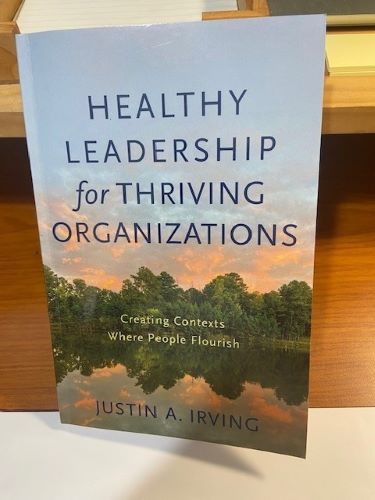
"Healthy Leadership for Thriving Organizations: Creating Contexts Where People Flourish" by Justin Irving offers a profound exploration of leadership principles, with a unique focus on those at the helm of larger organizations. Published in 2023 by Baker Academic, this book stands out for its explicit targeting of top-tier leaders, including CEOs, CFOs, Presidents, Vice Presidents, and Principals—an unusual approach that sets it apart in leadership literature.
Irving's work is unabashedly Christian, weaving solid Biblical and theological perspectives into its foundational ideas. The book's primary objective is to guide leaders in fostering thriving organizations through the foundational well-being of individuals within them. It is also particularly well-suited for those with overarching governance responsibilities, such as board members.
Structured in a logical progression, the book begins by examining the concept of leaders, then narrows its focus to leading oneself, leading teams, and guiding team members. The final section delves into the crucial characteristics of thriving organizations, covering aspects like communication, culture, crisis leadership, and change.
Its unapologetically Christian approach enriches the leadership discourse, offering a refreshing perspective on creating environments where individuals and organizations can flourish. "Healthy Leadership for Thriving Organizations" is a valuable resource for leaders aspiring to navigate the complexities of large organizations while remaining grounded in Christian principles.
I know this author personally and have not been disappointed in this book. Justin is a committed Christian academic and leader, living the values he researches and writes about. It is a book built on a foundation of prayer and integrity and I cannot recommend it highly enough.

A new article from McKinsey & Company [CLICK HERE TO READ] explores the evolving landscape of finance skills in the era of artificial intelligence (AI) and advanced automation. As generative AI tools become prevalent in financial services, comprising 24% of staff tools within a year of availability, the article delves into the changing skill sets required for finance professionals. In a 2023 McKinsey survey, CFOs identified capability building and advanced technologies as crucial for building organizational resilience.
Analyzing finance job postings from 2018 to 2022, the authors identified a shift in demand for skills. Four broad capability areas emerged: finance subject matter expertise, managing financial data, processes, and technologies, generating financial insights, and leading self, teams, and organizations. While all skill sets saw increased demand, the softer and more strategic skills associated with leadership, collaboration, and communication experienced a growth rate of over 7%, outpacing more transactional skills.
The shift is attributed to automation, which is steering professionals away from transactional and know-how-based skills toward human-centered skill sets. With technologies like generative AI automating transactional activities, the demand for skills related to personal and organizational leadership is on the rise. These leadership skills are crucial for translating financial insights into improved business performance, ensuring effective decision-making, and navigating complex organizational landscapes.
The article concludes with actions for finance leaders to navigate this evolving landscape successfully, including determining future skill requirements, assessing current staff skills, investing in targeted capability-building programs, and strategically recruiting talent to fill skill gaps.

Psychological safety is a term that has grown in significance and use in recent years, and with good reason. But what is it? A recent article from McKinsey & Company [CLICK TO READ] explains not only what it is, but its importance to organisations, and what they can do to enhance it for their employees.
The article emphasizes the pivotal role of psychological safety in fostering productivity, creativity, and innovation, examining its influence across various life domains. Rooted in Maslow's hierarchy, psychological safety is posited as a fundamental need for optimal performance in home, school, and work environments. Defined as feeling secure to take interpersonal risks, share ideas, and express concerns without fear of negative repercussions, psychological safety forms the bedrock of innovative, resilient communities.
The benefits of psychological safety in the workplace are well-established, with a McKinsey survey revealing that 89 percent of employees view it as essential. Beyond enhancing workplace culture and inclusivity, psychological safety significantly contributes to team effectiveness, learning, employee retention, and overall better decision-making and performance.
Leadership plays a critical role in fostering psychological safety. Leadership development programs are identified as a key strategy, with specific skills such as open-dialogue, sponsorship, and situational humility highlighted. To effectively nurture psychological safety, leadership development should extend beyond one-off programs, incorporate emotional and sensory experiences, and integrate skill development into daily work.
The article also delves into supporting mental health in employees, suggesting strategies such as reducing stigma, promoting workplace programs, ensuring equal accessibility to behavioral and physical health services, leveraging digital points of access, integrating healthcare delivery, and using analytics for tailored solutions.
In challenging times, compassionate leadership becomes paramount, requiring awareness, vulnerability, empathy, and compassion. Deliberate calm, considered a toolkit for adapting to changing situations, involves cultivating soft skills like self-awareness and emotional intelligence. Leaders are encouraged to acknowledge reactive tendencies, role model vulnerability, demonstrate empathy, and act with compassion.
Finally, the article emphasizes the need to attend to the psychological needs of lower earners, highlighting that satisfying these needs across all income levels is not only responsible but also correlates with better business outcomes. The holistic approach advocates for addressing the psychological needs of employees, regardless of their position, to enhance satisfaction and overall performance.

Let’s go full science nerd for a moment, which will provide some very interesting implications for your workplace and work habits. A recent online article from Knowledge at Wharton [CLICK TO READ] explores the intersection of neuroscience and workplace culture. The company Slalom, in collaboration with the Wharton Neuroscience Initiative (WiN), conducted a groundbreaking experiment in which employees measured their own brain activity while engaged in real work. The study revealed key insights with implications for creative thinking, employee engagement, and team chemistry.
The experiment involved Slalom employees wearing Emotiv brainwave sensing headsets during work, allowing the measurement of brain activity. One major finding highlighted the impact of breaks on brain activity. Employees who took 10-minute breaks between meetings experienced increased brain signals associated with lower stress and deep, creative thinking. This challenges the trend of back-to-back virtual meetings, indicating that incorporating breaks can lead to improved physiological indicators of performance.
The study also delved into the relationship between work relationships and brain activity. It found that employees who reported feeling closer to each other exhibited more similar brain activity while watching videos, suggesting a correlation between relationship quality and brain synchrony. This has implications for predicting team chemistry based on brain activity patterns.
Further, the research explored how internal messaging resonates with employees based on their engagement levels. Employees who rated Slalom highly for promoting knowledge sharing and leadership development showed the highest overall brain activity during a video promoting Slalom as a great place to work. This suggests that internal messaging is most effective for the most engaged employees.
The findings prompted actionable steps, which includes incorporating breaks into schedules and considering the needs of global team members to build stronger connections. The integration of these insights resulted in higher employee experience scores for participants in the experiment. While you may not want to go all out and measure your employees brain waves, you can benefit from the experience of those who have. The study's practical recommendations emphasize the value of breaks, global team connection strategies, and optimizing internal messaging for improved workplace culture.