Conflict. It’s a word that puts everyone on edge and brings up all sorts of negative memories. We do our best to minimise it and sweep it under the carpet, but as unpleasant as it is, conflict is also unavoidable. Since we can’t escape it, what if we re-think our approach and view it as something to be harnessed? Yes, dysfunctional conflict has a negative impact on people, but functional conflict can actually improve group satisfaction and performance.
So, what’s the secret to harnessing the positive power of conflict? There are two secrets:
An episode of Dr Adam Grant’s WorkLife podcast entitled “The Science of Productive Conflict” provides some excellent insights into how you can keep conflict functional. The most important thing: ensure everyone agrees on what the disagreement is actually about. Look deeper to find the root cause of the conflict and resolve that issue.
The right type of conflict goes further than just functional versus dysfunctional. It’s about where the source of the conflict lies. Relationship conflict has overwhelmingly negative impacts on group satisfaction and performance. Not surprising really, and this is the kind of conflict you do work to minimise.
Task conflict, though, can actually increase individual and team performance and group satisfaction levels. Surprising? Yes and no. Without conflict, many of these task-related issues may go unnoticed and necessary changes might never occur. Conflict brings these problems into the open, prompting a search for solutions and encouraging innovation. That’s worth harnessing.
However, this is where secret number two comes in, because the positive effects of conflict are dependent on how the conflict is managed. Passively ignoring conflict is harmful to people and productivity, while actively managing the conflict increases productivity and satisfaction.
Simply put, sweeping your problems under the carpet won’t help—things will just continue to fester. The key is to get on the front foot, identify what the root of the issue is, and work towards the most appropriate solution. Yes, conflict can be scary, but we need not live in fear of it. After all, without a struggle there can be no growth.
Photograph
Photograph by Yan Krukov from Pexels.
[x_callout type="left" title="Study leadership and management" message="As a business professional, you’re looking for a sophisticated set of skills and abilities to adapt to rapidly changing business environments. Organisations require effective leaders who understand the business needs of their organisations. Avondale’s Graduate Certificate in Leadership and Management will provide you with advanced training in the practical, ethical, moral and spiritual dimensions of leadership. You can study this course on its own, or use it as credit towards an MBA. We’re offering limited Commonwealth-Supported Places to Australians and New Zealanders. Securing a place will save you more than 20% on fees. Available only to full-time students who commence in August." button_text="DOWNLOAD COURSE GUIDE" href="https://mkto.avondale.edu.au/Leadership-and-Management.html" target="blank" class="x-btn-yellow"]
Reading the title above, how many of you just had your heart start beating faster with rising anxiety? Just the mere mention of stress can set people off with guilt and anxiety. But stress is not all bad, I have found recently out. A recent article in the February 2021 McKinsey Quarterly (read it here) provides some very practical advice around managing stress so that it can be harnessed for good rather than being destructive. Stress, whilst being a constant companion, has not been my friend over the years, so I was most interested to see how I might be able to negotiate peace terms with my ever-present escort and develop a more wholesome relationship.
The article is very current and addresses not just the typical stressors we face in work, but also those associated with the pandemic. The essence of the article is to not seek to eliminate stress, but through getting to understand it, to use the upside while minimizing the downside. Understanding begins with realising there is a state of recovery and rest hat follows the heightened state of stress, and that this enables recuperation and opportunity to process what has happened and to learn from it. Failure to create the space for the calming process leads to chronic stress, where all the bad stuff happens.
To understand our stress more effectively the article refers to a series of questions we can ask ourselves that helps to paint a picture of what triggers stress for us, when we feel most calm, and how to best harness our stress responses. Once we have this self-awareness, we can then create the space we need for engagement and focus by doing things like blocking time for “deep work”, reducing distractions, and learning to take a break form screens. Thankfully, there are numerous practical tips on how we can tackle these things.
The next step is to then create conditions for our rest and recovery. Again, there are several very good ideas on how to do this (for example, getting serious about sleep, deep breathing, and more), all of which are accompanied by practical tips that give us tangible ways to make it happen.
Finally, there is the state of being able to alternate between engagement and recovery, so we do not accumulate chronic stress, and instead have transitions between the two states that become tools for us to draw on rather than circumstances we respond to. As previously, there are exercises that can help us achieve this.
What I particularly like in this article is that it concludes with some constructive ways that we can help others manager their stress as well. There is the suggestion to help others create conditions for focus and recovery, and to be observant, vigilant, and caring. As leaders, we have a responsibility to help our teams both by example and through resourcing them.
My journey with stress is taking a different route because of this article, one that I hope leads to a productive and sustainable time together.
The Avondale Business School hosted a Christian Education Research Centre (CERC) Research Symposium in April for Higher Degree Research (HDR) students. Four students presented their research projects to a room filled with academics, school system administrators, and fellow HDR students. The topics covered ranged from Adventist Educational Mission, to the Impact of Authentic Christian Leadership on Transformational Christian Schools, to Engaged Moral Ownership and Effective Governance of Transformational Christian Schools, through to Factors Influencing School Choice.

ABS lecturer Dr Peter Williams, who also serves as Director of CERC, was thrilled with the support of staff and stakeholders, and much positive feedback was received for the event. It was particularly pleasing to have the feedback of Adventist Schools Australia administrators who noted the calibre and value of such Christian Education research to the education system. Future CERC events will continue to feature HDR students, as well as Avondale staff research projects and external speakers.
“Spiritual leaders who simply follow secular methods may experience some degree of success, but they will not rise to the higher level of leadership possible for true spiritual leaders.” I came across this quote as I was taking another look at some books I have not read for a while. Consequently, I am revisiting a Christian leadership classic that has been revised and expanded. Spiritual Leadership: Moving People on to God's Agenda by Henry Blackaby and Richard Blackaby (2017, Bradman & Holman) is a Christian leadership classic that pushes leaders to think very seriously about what it means to be a spiritual leader.
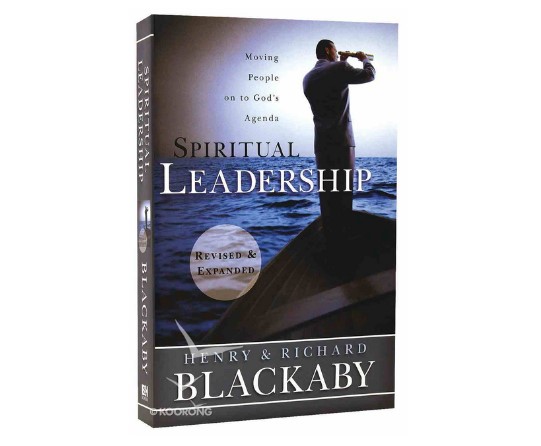
The authors argue that Spiritual leadership is not an occupation: it is a calling, and any Christian in any context of leadership can (ought) to be spiritual leaders. But it is something that God must assign to people who are striving to be the kind of people God desires them to be. Further, real spiritual leadership is all about moving people onto God’s agenda.
Both men are experienced leaders in a number of different contexts, and published authors, and draw from their own experience, as well as their experiences guiding hundreds of leaders into successful spiritual leadership roles in a wide variety of organisations and contexts.
The book is very well organised and written. While very easy to read, it is also very challenging as it pushes the reader to take leadership to another level. The argument is very compelling as the authors use scripture and experience. interspersed with the stories of people who are living the principles to illustrate and reinforce their ideas.
Aspiring and new leaders would benefit greatly from this book, as it lays out a clear set of leadership principles. However, experienced leaders may find it challenging because the authors call out leaders who may appear very successful but only talk about being spiritual. This book shows what it means to truly be a spiritual leader. It is a very worthwhile addition to any leader’s library, but only if it is read.
It’s a COVID thing. Lockdowns are good for virus control but bad for social connection. As they lift, we seek the company of those within our circle of influence.
This is pretty clear in Microsoft’s annual Work Trends Index, which surveyed more than 31,000 employees across the world and based findings on 112 billion email interactions and 2.3 billion Microsoft Teams interactions. The index shows our “distant” networks, those outside of our immediate team, shrunk because of the pandemic. It also shows 65 per cent of us now crave more in-person contact. And then there’s the increasing risk of proximity bias.
Proximity bias is the tendency to give preferential treatment to those in our immediate vicinity. Take the following example. To whom would you be more likely to loan $100: your next-door neighbour or the neighbour down the street, assuming they have an equal need for the money?
Like most biases, proximity bias usually happens unconsciously. Imagine a workplace scenario where a simple issue, such as not being able to open a file, arises. Who are you most likely to ask for help: a colleague working at the desk opposite yours or a colleague working from home? The quicker of the two options, right? Over time, repeated interactions like this build a bond with those closer to us quicker than with those farther from us.
In-person contact can change the nature of the relationship with superiors. They might start inadvertently favouring those they’ve developed a connection with by virtue of proximity. Longer-term favouritism can break down trust and, unsurprisingly, create feelings of unfairness. In the workplace, employee morale, productivity, commitment, absenteeism and turnover are all impacted.
So, how do we protect ourselves from proximity bias? Education is a good place to start. Raising awareness of unconscious bias, reviewing team connection, and making a plan to connect with all employees are worth considering, too, if you’re in the workplace. Asking others what kind of conversations you have can reveal if you might be giving preferential treatment to some. It may be as simple as realising this is taking place and being mindful of the need to keep an eye on it.
Remembering to offer those farther from you opportunities to contribute or add more value could help. Intentional touch points are incredibly valuable in virtual environments.
Photograph
LinkedIn Sales Solutions on Unsplash.

I love meetings! Especially well-run meetings, and a recent article I found has some fantastic advice on how to ensure your meetings are actually productive. Elizabeth Doty writes in strategy+business (read it here) that most meetings fail for participants lacking a clear sense of why the meeting is necessary. The article is short and punchy, and well worth the few minutes it takes to read it, however following is a quick overview of the main points:
Implement these three simple things in your meetings and see the difference.
The Australia -wide 2020 QILT (Quality Indicators of Learning and Teaching) Student Experience Survey (SES) results place Avondale Business School as No. 4 in Australia! Avondale’s BBus is consistently among the top 10 universities and higher education providers that had courses in the ‘Business and management’ study area for ‘quality of teaching’, out of a possible 83 institutions.
This is a remarkable achievement given the size and resources available to the big universities compared to ABS.

The 2020 SES was collected across September and October from students currently enrolled at Avondale, and had a response rate of 54.6%, compared to a National Average response rate of just 39.7%.
The results from the SES show that from an overall undergraduate perspective that 83.1% of Avondale students were satisfied when compared to the national average of 73.5%.

These results highlight the professionalism and talent of the ABS team and reflects their interest, care and support for students. Unlike the big universities, ABS students are known by their name and not as a number and have ready access to staff.
Congratulations to the ABS team and students!
Leaders faced massive challenges adapting to the COVID-19 pandemic during 2020 (and beyond), requiring rapid, dramatic and at times traumatic change and decisions. Uncertainty and disruption became the everyday and many industries were facing scenarios they had never planned for.
A report by PWC asked thousands of CEOs from across the globe and industries to reflect on this and then look forward to what lies ahead. PWC conducted its 24th Annual Global CEO Survey in January and February this year and captures the lingering effects of the previous year.
The most important and encouraging finding is the vast majority of CEOs see improvement on the horizon and are confident that over the next 12 months things will get better, including improved growth.
On the other side, it is interesting but not surprising that the top-20 threats CEOs are facing have changed dramatically. The top two are now pandemics and other health concerns (previously not rated) and cyber threats (previously number four). Other threats previously not listed but that now loom large for businesses are supply chain disruption, readiness to respond to a crisis and declining employee wellbeing. Another threat that is now considered much more serious—moving from 20 to 10—is misinformation and its spread, which highlights the finding of other research that we are experiencing historically low levels of trust.
A number of interesting challenges arise from the attention of CEOs being drawn away from what were previously considered major threats in 2020 to even more pressing issues:
The events and responses to events like 2020 force us to focus on what is really important, both personally and professionally. The challenge for us now is to find a way to keep that focus on the important, embed the learnings and gains and avoid falling back into old habits and ways of leading and managing.
This is a wake-up call for all leaders. Let’s not fall asleep at the wheel again.
Photograph
Yanalya from www.freepik.com.

When leaders “very frequently” or “almost always” use the Five Practices of Exemplary Leadership, 95.8 per cent of their direct reports are highly engaged. This is the claim (backed by solid evidence) authors James Kouzes and Barry Posner make in the sixth edition of their bestselling book The Leadership Challenge (John Wiley & Sons).
This book is a field guide for your leadership journey, written by authors who are responsible for some of the most read and recommended books on leadership and among the most respected leadership academics. Their qualitative and quantitative research is based on more than 400,000 surveys from across the globe every year.
Each chapter has action points at the end to ensure you know exactly what steps an exemplary leader would be taking. Thus it details the “Practices leaders use to transform values into actions, visions into realities, obstacles into innovations, separateness into solidarity, and risks into rewards.”
Kouzes and Posner ask of leaders at all levels and from across the world, “What did you do when you were at your personal best as a leader?”, to develop the Five Practices of Exemplary Leadership. The practices are:
Kouzes and Posner aren’t bestselling authors for nothing. The Leadership Challenge is so simple but packed with so much depth. It’s logical and sequential—you can read from anywhere to get information on any topic or start at the beginning and work your way through.
Just beginning in leadership or want to fine tune your existing skills? This book is for you, with gems like the following flowing out of the pages: “The domain of leaders is the future. The work of leaders is change. The most significant contribution leaders can make is not to today’s bottom line; it is to the long-term development of people and institutions so they can adapt, change, prosper, and grow.”
I’m embarrassed I waited so long to own my own copy.
Photograph
Direct Media from StockSnap.
Being an old patriarch that I am, I have seen a few restructuring efforts in my time. A few of them actually achieved what they set out to do – but only very few. Why is this? And why do we keep trying and failing?

Recently we came across an article from UNSW that looks at this specific issue and offers some constructive advice (click here to read). Part of the problem identified in the article is that the people doing the designing are bringing their backgrounds and biases based on the old structure. Too often these flow into the design of the new, which misses the mark.
Outlined in the article are six steps to ensure your organisational redesign has a good chance of actually achieving its goal. The article is a short read but packed with plenty of good tips. Following is a point form summary of the six steps:
While this won’t necessarily guarantee success every time, it does at least offer a process that can improve the chances. Tuck this one away for the next time you are involved in an organisation restructure.