After two years of Covid-induced hiatus, the Avondale University Postgraduate residential winter school was back on the Lake Macquarie campus in July. Students from a variety of postgraduate courses, including the MBA, Master of Education and Master of Arts braved the rains and floods for a week of intensive practical learning.
Avondale Business School Senior Lectures Dr Warrick Long and Dr Peter Williams provided interactive learning experiences that included case study discussions, simulations, and group discussion. Students also completed one of the assessments for each unit via group projects.

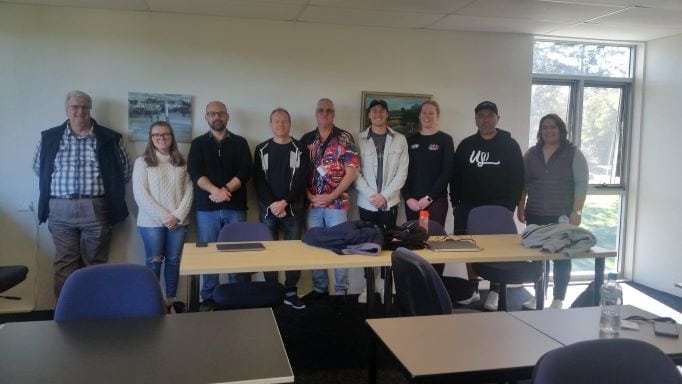
Having the postgraduate students in a class setting is very different to undergraduates because the postgraduates bring their experience and prior learning with them. Rather than using the traditional “jug to mug” style of learning by lectures, the students discuss ideas and concepts and share from their own experiences. This collaborative approach means everyone learns from each other, while also creating life-long professional networks for the future.
Students readily expressed their appreciation for the experiences, and look forward to applying their learning into their workplaces.
Avondale Business School team members have been active in sharing and developing their professional knowledge in the last month.

Dr Warrick Long was in Brisbane to deliver the keynote presentation for the annual Connect program for educators and professional staff of Adventist schools throughout South Queensland and Northern Australia. He spoke on the question of 'Who Am I?' and what that means in key relationships with ourselves, our families and in our professional world. It was a chance to reconnect with old friends, former and current students, and to make new friends. The content for the presentation was drawn from some of the ideas and concepts in the core Avondale University MBA unit Theology, Theory and Practice of Leadership
And our own Associate Professor Lisa Barnes presented at the Accounting and Finance Association of Australia and New Zealand (AFAANZ), Special Interest Group in Accounting Education in Melbourne in early July. It was a combination of face to face and virtual attendees. Her paper was titled “Development of the SOS Model for Institutions to Support Academic Wellbeing during COVID-19 disruptions and the move to Emergency E-Learning” and discussed the challenges academics and students faced with the rush to online learning during the lockdowns from COVID-19 in 2020 and 2021. Her research introduced the SOS model – which provides support for students and academics from an institutional level, down to individual support and development to increase student engagement and reduce stress for academics and supporting their wellbeing during disruption. Her findings are from a collaboration with AFAANZ who allowed her survey to be linked in their newsletter from February to June 2022 https://www.afaanz.org/
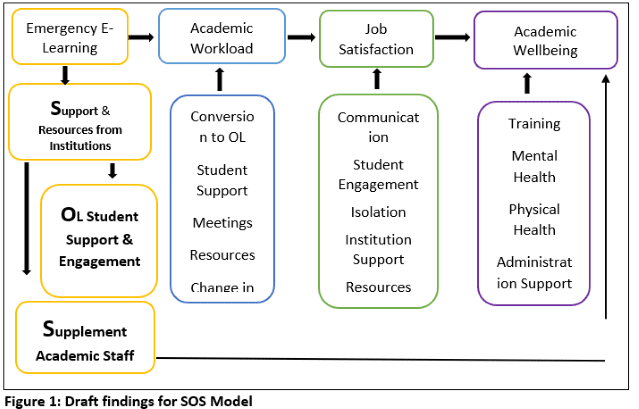
Attendance at the conference also allowed her to increase participation in the survey by using QR codes in posters around the conference halls, that allowed conference attendees to complete the survey whilst at the conference. She hopes to use this additional information to write a journal article on the findings. Her conference attendance was supported by a grant from the Christian Education Research Centre (CERC) https://www.avondale.edu.au/research/christian-education/
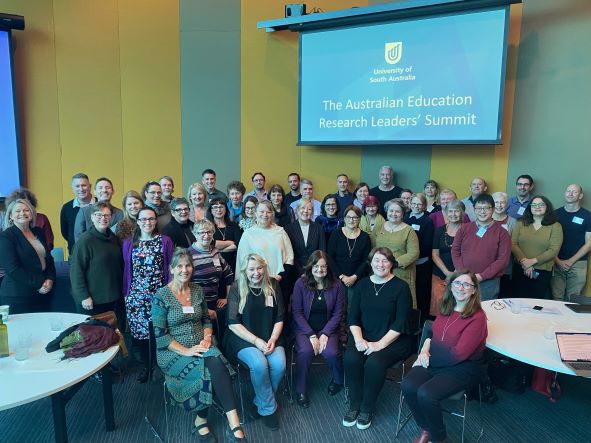
Dr Peter Williams also attended the Australian Education Research Leaders’ Summit held at the University of South Australia on June 29-30. This summit was convened by the Australian Association for Research in Education (AARE) and the Community of Associate Deans Research in Education (cADRE), with short presentations by education research leaders such as Professor Allyson Holbrook, Professor Michelle Simons, Professor Catherine Manathunga, Professor Jenny Gore and Professor Marnie Hughes-Warrington. Issues such as challenges and opportunities in educational research, lifting the profile of educational research, principles for collaboration, and succession planning and the development of future educational research leaders were discussed, with arrival at a consensus for an action plan going forwards, and which will inform the research undertaken by ABS academic staff.
“Boards stand accused of being tone-deaf, behind the curve, and even patently corrupt”, so asserts author Dambisa Moyo in her new book ‘How Boards Work’ (2021, New Bridge Street Press). Moyo is an economist with a strong academic background who has published widely, while also being a director on numerous global company boards.
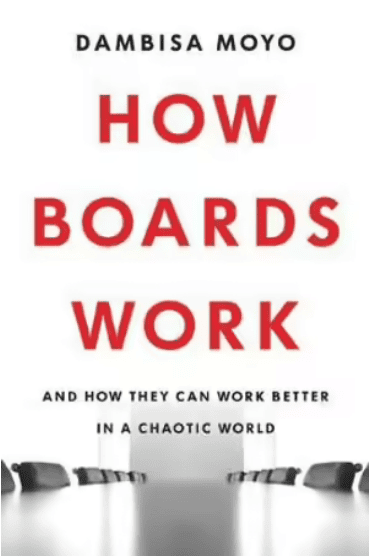
The book champions a modernized approach to governance and while it incorporates the effects of the 2020 pandemic, it is very future focussed. It covers not only the basics of good board governance, but also tackles the issues and tough questions facing directors. The principles of the book apply equally across multinational organisations to not-for-profit and smaller entities.
Beginning with a short but informative history of how boards developed, it lays out the case for change, peppered with examples and illustrations. It situates the role of the board in organisations really well, highlighting how they can best add value. Topics explored include the board’s role and responsibility for long-term planning and strategic direction, selecting the CEO and new board members, and overseeing company culture. It finishes by looking at the top five critical issues facing boards, with potential proposals for reforms moving into the twenty-first century.
The author manages to blend the academic with her extensive experience to produce an interesting and worthwhile book, suitable for both new and experienced directors. This would be a good addition to the library of any company director or governance specialist.
My father would be shaking his head at the growing trend for companies to explore a four-day work week. The man adamantly believed employees had to be at the office five days a week, otherwise you would go out of business. If the prospect is so grim, why are so many companies looking more seriously at implementing the four-day work week?
An article in the magazine Insight from the Kellogg School of Management at Northwestern University explores this in some detail. It notes the increasing power employees have over their schedules and the appeal of a four-day work week to them, giving companies that adopt it an advantage in sourcing talent.
Europe has been the early adopter, with Iceland, Belgium, Scotland and Spain all well into pilot programs. Thirty companies in the UK are about to trial, and at least two in New Zealand. A number of US companies are also at the implementation stage following successful trials.
The main advantages of a four-day work week include:
The article acknowledges the four-day work week is not a “one-size-fits-all” approach, with knowledge and white-collar workers being the best fits. Restaurants and call centres could also have problems, but it is still worth exploring the potential advantages.
Planning and preparation are key to ensure there are no legal impediments and to answer questions such as whether it is mandatory or optional for workers, whether remuneration remains the same, and what roles are most suited. Leaders need “to be clear on the initiative’s goals, its definition of success, and how progress will be tracked and measured.” A trial period of at least six months is recommended.
Potential pitfalls can include:
The article offers practical suggestions to deal with these issues.
Overall, the tenor of the article is nudging in the direction of having a go. It’s certainly worth thinking about.
Photograph: Rawpixel.com at www.freepik.com.
It was a major shock to our family when, after more than 20 years, my father resigned from a company to work for another. His generation were all about being loyal to your employer. Despite his action, his advice to me when I was looking to enter the workforce was to try and find an employer where I could stay for my entire career. But it seems sentiment has changed, and surveys and statistics indicate that most employees will now change employers (and even careers) several times during their working lives.
A recent article in the online magazine Knowledge from the Wharton Business School (find the link here) explores this issue of workplace loyalty and makes the point that “the modern workplace has become increasingly transactional”. That is, rather than being about unfettered loyalty, both parties recognise there is a relationship of exchange of give and take. When one party feels the transaction is no longer beneficial, it is ended, either by the employee choosing to leave, or being forced to leave, depending on who perceives they are “losing out” in the exchange.
Employers well know that the cost of employee turnover can be very high, and that it is typically more economical to try to retain good employees than to replace them. Not to mention the experience and institutional knowledge that goes with them.
The article traces why loyalty was so prevalent, and why it is now diminishing., It also notes the effect of the pandemic on workplace loyalty and how vulnerable organisation are right now if their employees feel less connection and trust in the organisation. While higher wages go some way to addressing these, the authors notes that it is also organizational citizenship that plays an important role. Where there is mutual trust employees feel more invested in their work and tend to have better productivity.
A worthwhile article to read to stimulate thinking about employees and how to encourage the good ones to stay.
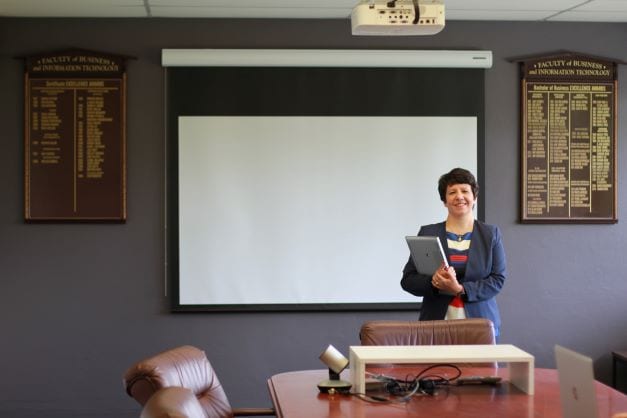
Our MBA students learn that informal leadership can be just as effective as formal leadership. Informal leaders are often characterised by their ability to influence, whereas formal leadership is strongly linked with having authority.
A recent article in Momentum, the University of Queensland business school online magazine (read it here), reinforces this by exploring the art of influencing without authority. As the article notes, “leadership is not the same as authority”, and with the changes initiated to adjust to working through COVID, leaders have had to revisit how they influence workers who are not necessarily physically present. In the Momentum article they provide some excellent tips for people who don’t necessarily have authority to effectively exercise leadership in two ways – influencing upwards and influencing across. The full article expands on these points, but a quick summary for you follows:
Influencing up (those more senior than you):
Influencing peers:
The article also has a final bit of advice regardless of who you are tyring to influence, “Authentically treating people with respect and taking accountability for yourself will go a long way to enhancing your ability to lead and influence others.” Great advice.
Nervous energy abounded for a group of final year students (many of the Business students) as they prepared for their final class involving engaging in a robust debate in front of Staff, fellow students, and invited guests on a thorny business dilemma. This was an assessed task that contributed to the students’ final grades.
The students in the unit Professional Ethics had spent the semester exploring a range of ethical issues and decision-making models. Each week in class they confronted difficult situations facing leaders and had to work their way through potential courses of action. Over time they came to realise that often leaders face decisions that involve no clear right answer, but a decision still has to be made. A number of tools were looked at that can help leaders with such dilemmas.
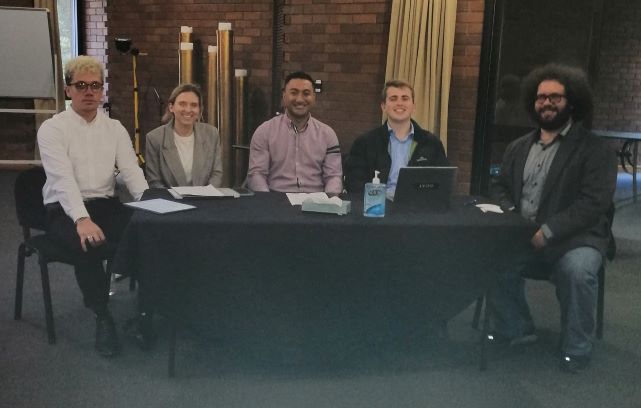

The debate, based on a case study the students had worked through, involved a manager facing a difficult decision. Teams were assigned to argue for or against a course of action, and both teams argued their cases vigorously and with well researched and informed arguments.
At the end of the debate the audience expressed their view on which team “won”, and on the quality of the presentations by all the students. While not every student was looking forward to the debate, they all appreciated the experience it gave them in presenting to groups and developing argument and counter-arguments in professional settings, which is a key part of the Avondale Business School philosophy of preparing graduates to be ready for their professional journey. Congratulations to all the students.
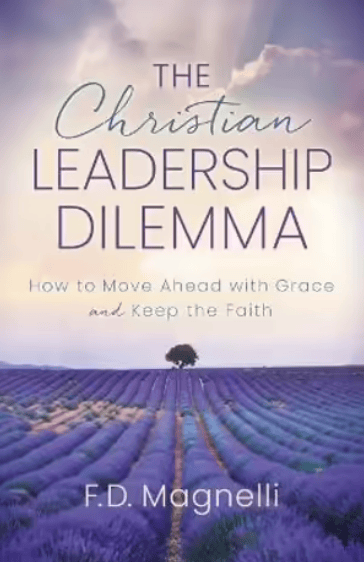
“Good leaders are those, with or without titles, who take initiative to move with God and retain a Christ-centered moral compass.” (p. 1) So begins a just released new book on Christian leadership ‘The Christian Leadership Dilemma’ by F.D. Magnelli (2022, Morgan James) that takes a different and at times confronting perspective on leadership within the Christian context.
The Christian Leadership Dilemma that Magnelli refers to is where leaders are following worldly business practices rather than the example of Jesus and have trouble distinguishing right from wrong. This book is heavy on Biblical foundations for its direction, which includes helping Christian leaders to stand up to bad leadership practices.
The book begins by reinforcing the calling of leaders to be servants and helpers, then tackles the tough issues of facing criticism and standing up for right when few around you are. The emphasis is very much on the importance of keeping the Work of God foremost in our service as leaders, and guarding against self-absorbed service.
Interestingly there is a section on avoiding personal success at the expense of collective success, again highlighting the leader as servant approach.
I found the book a challenging read, mainly because it really forced me to re-evaluate my own leadership and leadership ideas. Sadly, I think many leaders will either not read this book, or give up on it too early because of its uncompromising and direct approach. However, I believe that to be a strength and would readily recommend this to all leaders as a reminder of what Christian leadership is really about.
During the turbulent teenage years (and for a bit afterwards), my daughters weren’t always keen to heed the advice I willingly and frequently dispensed to them. Annoyingly, they’d get the same advice from one of our family friends and happily act on it. While I was grateful for trusted friends with shared values, it would have been quicker if the girls just listened to me in the first place.
Jesus also experienced this when He returned home to Nazareth and began teaching. All four Gospels report the people, including some of His own family, scoffed at Him. Jesus responded by noting that, “A prophet is honoured everywhere except in his own hometown and among his own family” (Matthew 13:57, NLT). I feel His frustration.
Reflecting on this, I introduced interviews with practitioners into the units I teach for the MBA. I wanted to glean from them advice on how theories and concepts translate into practice. Students, then, don’t just have to take me at my word—there’s another perspective. I started this practice by recording more than 30 interviews for a leadership unit. It’s proven to be remarkably successful with students who frequently express appreciation for the variety of voices.
I reviewed many of these interviews and found five recurring themes.
The first: God first. He should be the basis for our mission and purpose and the foundation for our leadership.
The second: people. Following God’s example, we need to love people to lead them. Key to this is developing and maintaining positive relationships. Communication, especially authentic listening, is important, as is maintaining mutual respect and common courtesy. Being authentic and humble also keeps relationships in balance (by not elevating ourselves or diminishing others).
The third: dynamic leadership. As leaders, we must be able to change ourselves and effectively introduce organisational change in ways our people can adapt to and not feel alienated or threatened by. A number of the leaders noted that in doing this, you must be able to distinguish facts from fads.
The fourth: feedback about organisational and personal performance. Leaders need to ensure they’re measuring what matters, not what’s easy. A crucial step is to follow through and deal with any inferior performance or performer. Leaders should also have a few trusted sources who are prepared to say when you’re not doing OK. Great leaders then take self-corrective actions.
The fifth: succession planning. Begin this from day one. If you care about your organisation, ensure there are always a few people ready to take your place. Several leaders said you also need to know when to move on. That’s not always easy.
As we look back with fading memories to life before the Covid pandemic, we find ourselves still functioning with processes that we thought would be temporary, and in particular how we work with teams. Words like ‘hybrid’ and ‘remote’ frequently precede our use of teams. There is no guarantee that people will all be in the same country, let alone the same room. Not everyone is happy about this and can point out all the problems associated with it.
A recent online article by Benjamin Tarshis and Jonathan Roberts in Strategy+Business (read it here) asks whether the problem is the mode of meeting, or if the problems actually existed anyway. A key point in the article is that “[t]he COVID-19 pandemic didn’t create a teaming crisis. IT exposed deficiencies in the in-person model while introducing more complexity.” They go so far as to questions whether we are even using the term ‘teams’ correctly. Instead, perhaps we are putting too much under the banner of a team, and instead, the authors propose three types of groups:
The common form in business tends to be the Team-in-name-only where people are assigned and told their part of a team, but with little engagement or direction. The article identifies two ways the team-in-name-only manifests. The first is through meeting bloat whereby virtual meetings means where we used to have 10 people attend, we can now invite as many as we like from anywhere on the plant – and we do. The second is by the excessive use of email and online chat that has replaced the in-person connections we used to have.
Offering some suggestions to address these issues, Tarshis and Roberts propose we:
There is a lot of good advice in the article that can help clarify the purpose of appointing people to teams, and the expectations on them.